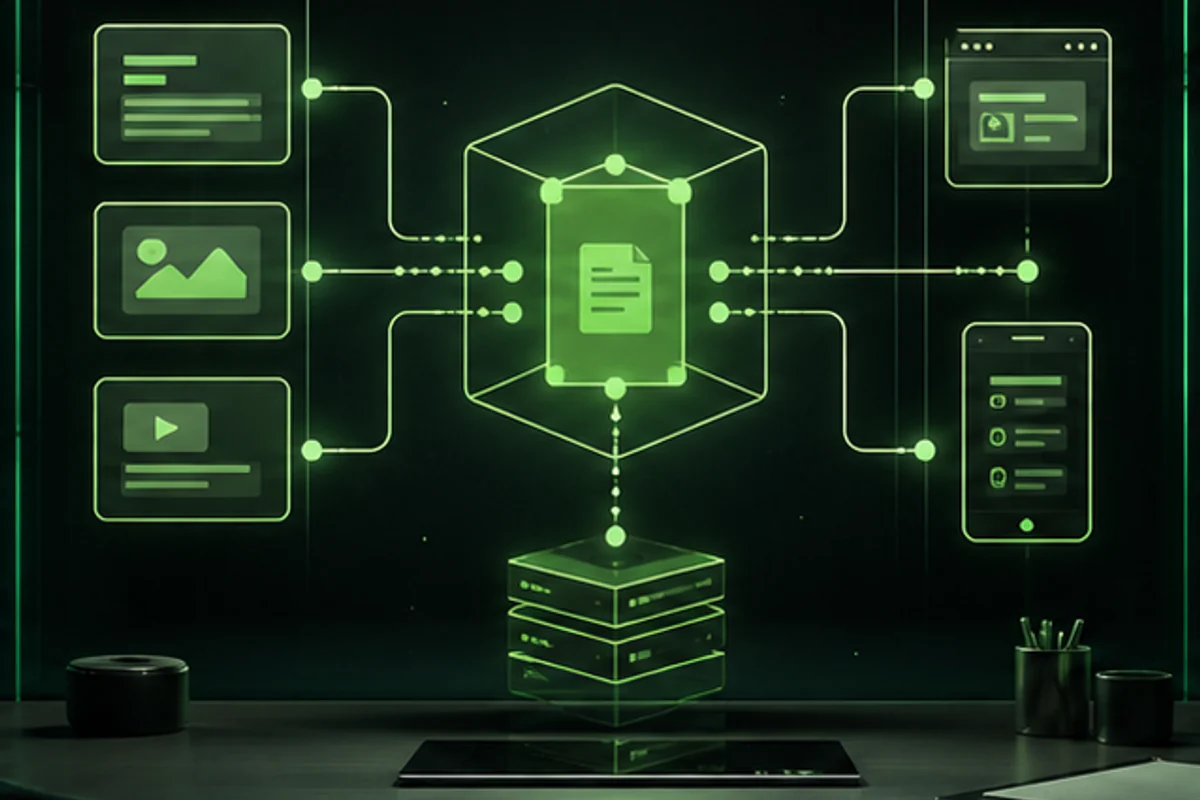
Compare delivery speed, preview, integration, operations and ownership without treating architecture as fashion. This independent WebStackora guide focuses on presentation architecture, author experience and operational responsibility. It contains no paid placement, vendor ranking or external commercial link; the method is designed to remain useful as products and prices change.
Start from the user journey and operating context
Define the channels, interaction level, preview expectations, release frequency, integration boundary and team skills that the architecture must support. Name the user, desired outcome, accountable owner and consequence of failure. Separate launch requirements from later options so an attractive demonstration cannot quietly expand the scope.
Document languages, markets, devices, accessibility needs, traffic patterns, content volume, integrations and support hours. Include ordinary use, a difficult edge case and recovery from interruption. Architecture becomes easier to evaluate when the conditions are concrete.
Build a decision record before comparing implementations
Write mandatory constraints, preferred qualities, exclusions and evidence rules. Keep security, privacy, accessibility, performance, editorial work and operations visible as separate dimensions. A single unexplained score hides trade-offs and weakens later review.
Record assumptions with an owner and expiry date. When a conclusion depends on a contract, regulation, market condition or live service capability, obtain current primary evidence before production. This launch guide supplies a method, not that time-sensitive verification.
Criteria that materially change the decision
Author experience
Test preview, scheduling, reusable blocks and correction with real editors. Record the owner, evidence, current configuration, exceptions and review date. Test the rule against a representative journey and one failure case so the decision remains reproducible after the platform, content or team changes.
Delivery boundary
Show which system renders pages, serves assets and owns redirects. Record the owner, evidence, current configuration, exceptions and review date. Test the rule against a representative journey and one failure case so the decision remains reproducible after the platform, content or team changes.
Integration cost
Count authentication, search, forms, commerce and analytics connections. Record the owner, evidence, current configuration, exceptions and review date. Test the rule against a representative journey and one failure case so the decision remains reproducible after the platform, content or team changes.
Operations
Assign monitoring, caching, deployment, upgrades and incident response. Record the owner, evidence, current configuration, exceptions and review date. Test the rule against a representative journey and one failure case so the decision remains reproducible after the platform, content or team changes.
Exit path
Preserve content, media, routes and presentation contracts for migration. Record the owner, evidence, current configuration, exceptions and review date. Test the rule against a representative journey and one failure case so the decision remains reproducible after the platform, content or team changes.
Prototype the smallest complete journey
Build a vertical slice that includes realistic content, identity, data, error states, monitoring and a deployable artefact. Avoid prototypes that replace every difficult dependency with a perfect placeholder. The purpose is to expose boundaries and operating effort.
Use synthetic or approved test data. Preserve source, configuration, environment and observations. Invite an editor, operator, support colleague and representative user to complete the journey without coaching; their friction is evidence that a technical demo cannot reveal.
Test accessibility, privacy and security as product behaviour
Use semantic structure, visible focus, keyboard operation, readable contrast, reflow, text alternatives and clear errors from the first component. Automated checks help find patterns, while human testing verifies whether a task is understandable and operable.
Map personal data, credentials, privileged actions, logs and third-party transfers. Minimise access, isolate secrets, validate untrusted input and provide revocation. Availability of a feature does not authorise data processing or remove the need for competent legal and security review.
Measure performance and reliability on real journeys
Measure cold and warm entry, navigation, interaction, error and recovery across representative devices and networks. Use distributions and traces rather than one best run. Relate technical signals to visible outcomes and annotate every material release.
Interrupt dependencies, expire sessions, delay responses, reject writes and repeat actions. Confirm idempotency, honest customer messaging, reconciliation and manual fallback. A system is not reliable merely because its components report healthy.
Plan content, SEO and international discovery
Give every useful page one purpose, stable route, descriptive title, meaningful heading, unique copy, representative image and appropriate structured data. Control canonicals, redirects, indexability, sitemaps and internal linking through an auditable publishing process.
Localisation includes terminology, examples, formats, availability, legal context and native review. Connect equivalent editions with correct hreflang only when they are genuinely usable. Do not publish thin machine variants to manufacture coverage.
Calculate total ownership and organisational fit
Include implementation, migration, licences, hosting, integration, content operations, accessibility, monitoring, incident response, training, support and exit work. Estimate ranges and identify the variables that can change the result rather than claiming false precision.
Check whether named people can own the platform during ordinary weeks and incidents. Complexity transfers to operations even when a supplier manages infrastructure. Prefer the simplest route that satisfies the verified requirements and can evolve through clear boundaries.
Risk signals that require stronger evidence
- Headless is selected for prestige rather than need. Stop expansion until the missing evidence, ownership or recovery path is explicit and tested.
- Preview is discovered too late. Stop expansion until the missing evidence, ownership or recovery path is explicit and tested.
- Two systems are operated by one unprepared team. Stop expansion until the missing evidence, ownership or recovery path is explicit and tested.
A risk signal is not a verdict on a technology. It means the current proposal lacks a material control. Narrow the scope, add evidence or choose a safer route before public exposure grows.
Release progressively and keep rollback real
Use immutable builds, previews, automated tests, human approval for consequential changes and progressive exposure. Connect source, artefact, configuration, database migration and release annotation. Define who can stop a release and what signal triggers that action.
Rehearse rollback and data compatibility before launch. Keep backups, exports, redirect maps, configuration history and a manual service route. After release, compare expected and actual outcomes and convert every incident into a regression test.
Use a compact WebStackora decision checklist
- Define the user journey, scope and accountable owner.
- Freeze mandatory constraints and evidence rules.
- Prototype the smallest complete realistic route.
- Test normal, adverse and recovery conditions.
- Verify accessibility, privacy, security and performance.
- Document cost, operations, portability and rollback.
- Approve progressively and schedule a dated review.
A mature web decision can be explained without product hype: this route serves these users under these constraints, produced this evidence, assigns these owners and can stop or change through this tested path.